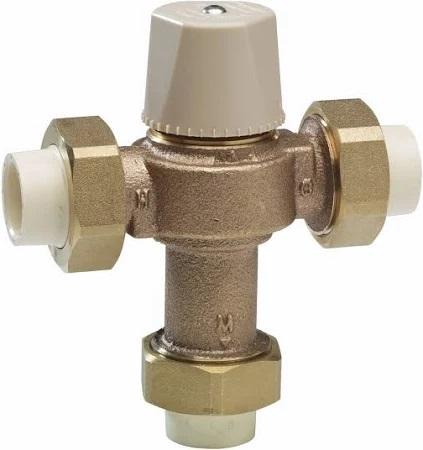
This article provides a deep, comprehensive overview of thermostatic mixing valves (TMVs), explaining their components, operation principles, installation locations, maintenance needs, and common troubleshooting steps.
What is a thermostatic mixing valve?
A thermostatic mixing valve (TMV) is a plumbing device designed to blend hot and cold water to deliver water at a safe and consistent temperature. TMVs are widely used in residential, commercial, and industrial settings to prevent scalding, improve comfort, and stabilize water temperature even when supply pressures fluctuate.
A typical TMV includes:
- Thermostatic element: A wax or bi-metal sensor that expands or contracts with temperature changes.
- Hot-water inlet: Receives water from the water heater.
- Cold-water inlet: Receives cold water supply.
- Mixing chamber: Where hot and cold water blend.
- Temperature adjustment mechanism: Allows users or installers to set the desired output temperature.
- Fail-safe function: Automatically shuts off hot water flow if cold water supply fails.
TMVs play a crucial role in plumbing safety, providing steady temperature control for sinks, showers, bathtubs, and entire domestic hot water systems.
How does a thermostatic mixing valve work?
A thermostatic mixing valve regulates the temperature of outgoing water by adjusting the ratio of hot and cold water entering the valve. When temperature changes occur—such as someone flushing a toilet or turning on another faucet—the thermostatic element reacts instantly and rebalances the mix to maintain the pre-set outlet temperature.
- Hot and cold water enter the valve.
- The thermostatic element senses water temperature. It expands or contracts based on incoming water temperature.
- The element adjusts internal pistons. This increases or decreases hot/cold flow to maintain the set temperature.
- Stable mixed water exits the valve.
- Failsafe activates if needed. If cold water supply unexpectedly drops, the valve restricts hot water flow to prevent scalding.
Features of thermostatic mixing valves
Thermostatic mixing valves offer several advantages in safety, comfort, and efficiency. Here are some notable features:
-
Accurate temperature control
TMVs maintain water temperature within a tight tolerance, typically within ±1–2°C of the set point.
-
Anti-scald protection
If cold water pressure drops, the valve rapidly reduces hot water flow to prevent dangerously high outlet temperatures.
-
Pressure balancing capability
TMVs automatically compensate for sudden pressure changes in the hot or cold water lines.
-
Durability
Most valves are made of brass or stainless steel, providing corrosion resistance and long service life.
-
Versatility
Used across residential bathrooms, hotels, hospitals, commercial kitchens, gyms, and industrial wash stations.
-
Energy efficiency
By stabilizing water temperature, TMVs reduce unnecessary mixing and help optimize hot water usage.
Where do you install a thermostatic mixing valve?
Thermostatic mixing valves can be installed in several locations depending on their purpose. Installers choose placement based on safety requirements, local building codes, and the desired control range.
Common installation locations:
- At individual fixtures – such as under sinks, at showers, or behind bathtub access panels.
- At water heater outlets – to regulate the temperature of the entire hot water supply system.
- In commercial buildings – upstream of distribution manifolds for safe, centralized temperature control.
- In hospitals or care homes – near patient-accessible points to meet scald-prevention regulations.
- In industrial wash stations or food facilities – ensuring consistent sanitization temperatures.
Factors influencing placement:
- The required temperature range
- Local plumbing code requirements
- Available access space for maintenance
- Need for individual fixture control vs. whole-building control
What is the difference between thermostatic and regular mixing valves?
While both types of mixing valves blend hot and cold water, thermostatic and manual mixing valves differ significantly in capability, precision, and safety.
| Feature | Thermostatic Mixing Valve (TMV) | Regular Mixing Valve |
|---|---|---|
| Temperature control method | Automatic, self-adjusting | Manual adjustment |
| Scald protection | Yes, includes fail-safe | No built-in protection |
| Pressure compensation | Automatically adjusts for pressure changes | Generally none |
| Consistency | Very stable output temperature | Temperature fluctuates if pressure fluctuates |
| Cost | Higher (more components) | Lower (simpler design) |
| Best use cases | Bathrooms, hospitals, commercial systems | Kitchens, low-risk fixtures |
How to adjust the temperature on a thermostatic mixing valve?
Adjusting a TMV’s temperature is a straightforward process, but it should be done with caution as small adjustments can create large temperature changes.
- Locate the temperature adjustment cap on the valve body. Often protected by a plastic cover.
- Remove the cap using a screwdriver if necessary.
-
Turn the adjustment screw or knob:
- Clockwise → lower temperature
- Counterclockwise → higher temperature
- Run water and test the temperature with a thermometer.
- Fine-tune as needed until the desired temperature (commonly 38–50°C depending on use case) is reached.
- Reinstall the safety cap.
For safety, many valves include a "maximum temperature stop", which prevents unintentional settings beyond recommended limits. You may need to lift or override this mechanism for temperatures above the preset limit.
What is the life expectancy of a thermostatic mixing valve?
The typical life expectancy of a thermostatic mixing valve ranges from 5 to 15 years. Several factors influence this lifespan, including:
- Water hardness – Mineral buildup can wear internal components faster.
- Frequency of use – High-use commercial locations wear sooner.
- Maintenance schedule – Regular cleaning and descaling extend lifespan.
- Valve material – Brass and stainless steel models last longer.
- Temperature fluctuations – Extreme hot-water conditions degrade thermostatic elements.
In residential settings with proper maintenance, many TMVs operate for more than a decade without major issues.
How to tell if a thermostatic mixing valve is bad?
A malfunctioning TMV can often be identified through several symptoms. Detecting issues early helps maintain safety and avoid scalding or uncomfortable temperature swings.
Common signs your TMV is failing:
- Inconsistent water temperature – Water gets too hot or too cold unexpectedly.
- Slow temperature adjustment – Delayed reactions to changes in water supply.
- No hot water or lukewarm water only – Valve may be stuck in safe mode.
- Poor water flow – Mineral buildup or internal blockage.
- Valve leaks – Worn seals or internal corrosion.
- Cold water backflow into hot line – Faulty internal check valves.
If multiple symptoms occur simultaneously, the valve may need repair or replacement.
How often should a thermostatic mixing valve be serviced?
Maintenance frequency varies depending on usage type and regional plumbing standards.
- Residential homes: every 1–2 years
- Commercial buildings: every 6–12 months
- Hospitals, nursing homes, safety-critical facilities: every 3–6 months
Regular servicing ensures:
- Proper temperature stability
- Reliable anti-scald protection
- Reduced mineral buildup
- Higher overall lifespan
Routine service typically includes cleaning strainers, checking internal components, calibrating temperature settings, and performing fail-safe tests.
Can you clean a thermostatic mixing valve?
Yes. Cleaning is a key part of maintaining a thermostatic mixing valve. Minerals, debris, and sediment often accumulate inside the valve and strainers, leading to poor temperature regulation and reduced water flow.
How to clean a TMV (general steps):
- Turn off water supplies to the valve.
- Remove the valve body or cartridge depending on design.
- Take out filters and strainers located at the hot and cold inlets.
- Soak components in descaling solution (e.g., white vinegar or citric acid).
- Scrub debris using a soft brush.
- Rinse all parts thoroughly.
- Reassemble the valve and restore the water supply.
- Test the outlet temperature to ensure accurate function.
For valves heavily clogged with limescale, professional servicing may be required.
Types of thermostatic mixing valves
TMVs come in various types designed for specific environments and applications. Choosing the right model depends on temperature needs, flow rate, and safety requirements.
| Type | Features | Typical Uses |
|---|---|---|
| Point-of-use TMVs | Small, compact; installed at a single fixture | Sinks, showers, bathtubs |
| Master mixing valves | Controls entire hot water system; high flow capacity | Buildings, hotels, schools |
| High-temperature TMVs | Handles higher inlet temps for industrial needs | Commercial kitchens, sanitation stations |
| Digital/Smart TMVs | Electronic temperature control and monitoring | Hospitals, smart buildings, automated systems |
Where thermostatic mixing valves are commonly used
TMVs are used in many industries and environments where safe water temperature is essential.
- Residential bathrooms for anti-scald showers
- Hotels for temperature stability across many rooms
- Hospitals and healthcare facilities to meet strict safety regulations
- Schools and daycare centers to protect children
- Gyms, spas, and pools for consistent warm-water delivery
- Manufacturing plants where controlled warm water is required for processes
How to install a thermostatic mixing valve
Installation varies depending on the type of valve, but the basic procedure follows similar steps. Always follow local plumbing codes and manufacturer instructions.
- Shut off water supply.
- Choose installation location — near fixture or at water heater outlet.
- Connect hot and cold pipes to the valve according to markings.
- Install check valves and strainers if not built-in.
- Connect mixed water outlet to fixture or distribution line.
- Turn on water and check for leaks.
- Adjust temperature to the desired setting.
Conclusion
Thermostatic mixing valves are essential components for modern plumbing systems, providing consistent temperature control, preventing scalding, and improving comfort and safety across homes and commercial buildings. Understanding how they work, where to install them, how to maintain them, and how to troubleshoot them ensures long-lasting performance and protection for all users.