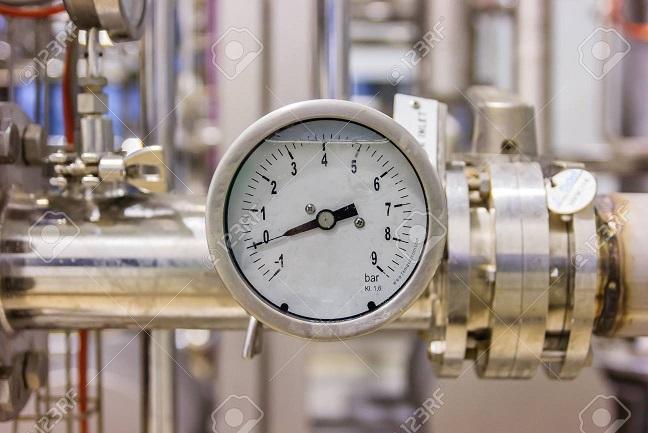
This article explains the differences between PSIG and PSI, how they are used in pressure measurement, their applications in industrial systems, HVAC, and valves, and how to convert between these two pressure units. Understanding the difference between gauge pressure and absolute pressure is essential for technicians, engineers, and anyone working with pressurized systems such as pipelines, air compressors, hydraulic circuits, water supply systems, and various types of valves.
What is PSI?
PSI stands for Pounds per Square Inch and is a unit used to measure pressure. It refers to how much force is applied over a one-square-inch area. PSI is widely used in the United States and industries that use imperial units, including automotive pressure systems, pneumatics, hydraulics, industrial equipment, plumbing systems, and gas distribution.
PSI is often considered a base unit for pressure because it can represent pressure in several forms:
- PSI (general use) — Sometimes used to describe pressure without specifying gauge or absolute measurement.
- PSIA (Pounds per Square Inch Absolute) — Measures pressure relative to a perfect vacuum.
- PSIG (Pounds per Square Inch Gauge) — Measures pressure relative to atmospheric pressure.
When someone says "PSI" without additional letters like A or G, the meaning depends on context. However, in engineering documents, PSI by itself is often avoided since it can be ambiguous. Instead, PSIA or PSIG is used for clarity.
What is PSIG?
PSIG stands for Pounds per Square Inch Gauge. This measurement reflects pressure relative to the surrounding atmospheric pressure. At sea level, atmospheric pressure is approximately 14.7 PSI. Because PSIG subtracts atmospheric pressure from the reading, a gauge measuring 0 PSIG is still under 14.7 PSI absolute pressure.
Most pressure gauges, including those on air compressors, valves, water pumps, and hydraulic systems, measure gauge pressure rather than absolute pressure. This is because the equipment interacts with atmospheric pressure and is designed to function relative to it.
For example:
- If a tank is pressurized to 50 PSIG, its absolute pressure is actually 64.7 PSIA.
- If a vacuum pump shows -5 PSIG, the system pressure is below atmospheric pressure.
PSIG is widely used in industrial systems, refrigeration, HVAC, valves, pipeline operations, and pneumatic circuits.
What is the difference between PSI and PSIG?
The main difference between PSI and PSIG is the reference point used for measurement.
| Feature | PSI | PSIG |
|---|---|---|
| Full name | Pounds per Square Inch | Pounds per Square Inch Gauge |
| Reference | May refer to general pressure, absolute, or gauge depending on context | Always referenced to atmospheric pressure |
| Atmospheric pressure included? | Not always (depends on type) | No — atmospheric pressure is removed from the reading |
| Zero reading means | Ambiguous unless clarified | Pressure is equal to atmospheric pressure |
| Where commonly used | General pressure discussion, tires, hydraulics | Industrial gauges, valves, HVAC, pumps |
In short, PSI is the general measurement unit, while PSIG specifies that the reading is relative to atmospheric pressure.
What is PSIA?
PSIA means Pounds per Square Inch Absolute. It measures pressure relative to a perfect vacuum. This measurement includes atmospheric pressure in its reading.
For example:
- 0 PSIA = complete vacuum.
- 14.7 PSIA = atmospheric pressure at sea level.
- 50 PSIA = 35.3 PSIG (approximately).
PSIA is crucial in scientific applications, high-altitude calculations, vacuum systems, and gas laws, where atmospheric pressure must be accounted for.
How to convert PSIG into PSI?
Converting PSIG into PSI (specifically PSIA) involves accounting for atmospheric pressure. The formula is:
PSIA = PSIG + Atmospheric Pressure
At sea level:
Atmospheric Pressure ≈ 14.7 PSI
Example conversions:
- 20 PSIG = 34.7 PSIA
- 0 PSIG = 14.7 PSIA
- -5 PSIG = 9.7 PSIA
If PSI is being used in a general sense (without A or G), it usually (but not always) refers to gauge pressure, meaning:
PSI ≈ PSIG
But in technical contexts, PSI should be clarified as PSIA or PSIG to avoid incorrect calculations.
Why does atmospheric pressure matter?
Atmospheric pressure creates a baseline that affects how pressure is interpreted. For example, instruments like hydraulic valves, process valves, and pressure relief valves operate based on differential pressure from their surrounding environment.
If atmospheric pressure changes (due to altitude or weather), the readings of PSIG-based gauges also change slightly. This is one reason absolute pressure systems (PSIA) are used in sensitive industrial processes.
How do valves use PSI and PSIG?
Valves operate heavily based on pressure, whether in water systems, gas lines, oil pipelines, or air compressor systems. Understanding PSI vs. PSIG is crucial for selecting, installing, and maintaining valves.
1. Control Valves
Control valves regulate flow based on upstream and downstream pressures. They are often rated in PSIG because they interact with the environment around them.
2. Pressure Relief Valves (PRV)
Relief valves prevent overpressure. Their opening setpoints are almost always rated in PSIG since they relieve pressure relative to atmospheric pressure.
3. Safety Valves
Safety valves used in boilers or steam systems may use PSIA or PSIG, depending on application. Steam systems often use PSIG because they vent to atmosphere.
4. Check Valves
Check valves rely on pressure differential. The cracking pressure (the pressure needed to open the valve) is often specified in PSIG.
5. Solenoid Valves
These electrically controlled valves typically list operating pressure in PSI or PSIG. They must always stay within rated pressure ranges to avoid failure.
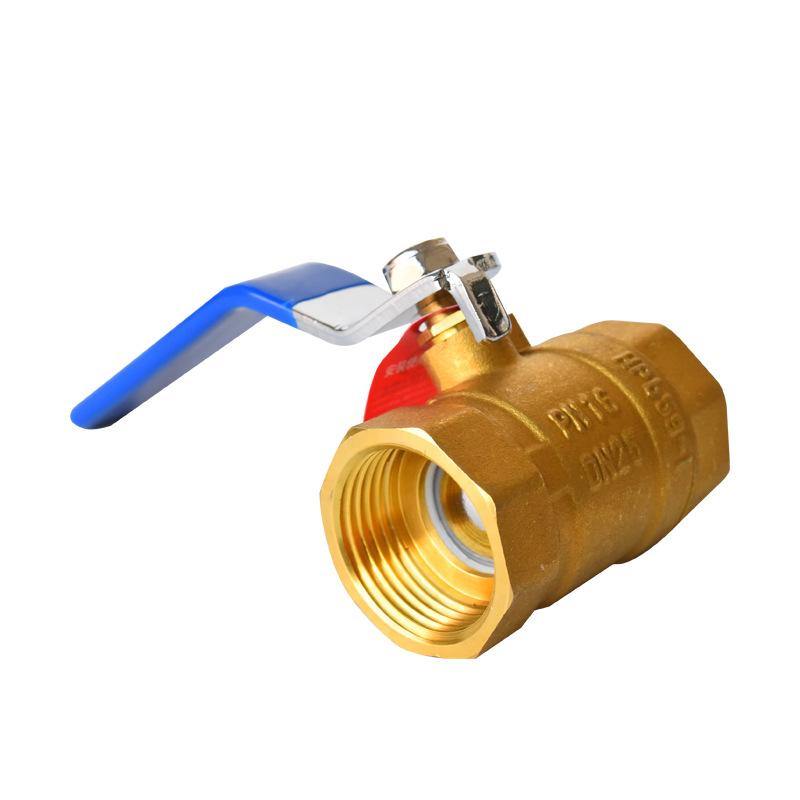
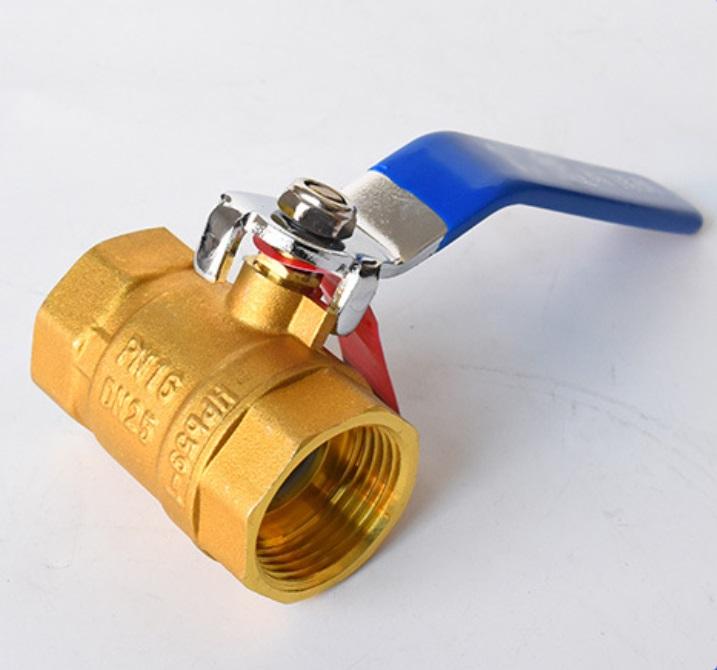
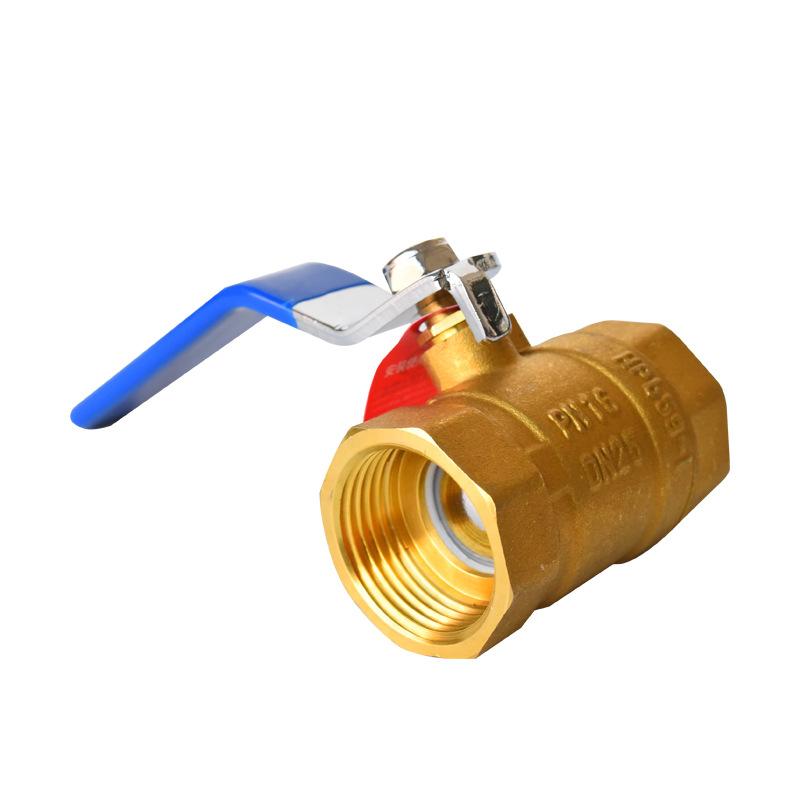
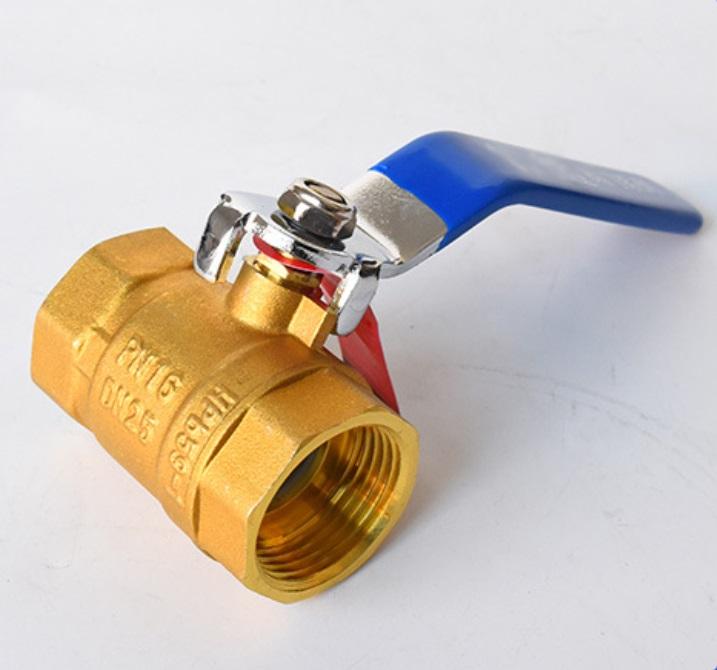
6. Ball Valves and Gate Valves
Used in plumbing, oil & gas, and water supply systems, they have pressure ratings such as:
- 150 PSI
- 300 PSI
- 600 PSI
These are usually interpreted as allowable gauge pressures (PSIG).
Is PSIG or PSI used in HVAC?
HVAC systems almost always use PSIG because refrigeration gauges are designed to measure pressure relative to atmospheric pressure.
Why HVAC uses PSIG
- Refrigeration gauges (manifold gauges) are calibrated in PSIG.
- HVAC pressure measurements assume a baseline of atmospheric pressure for safety reasons.
- Technicians must read pressures relative to ambient conditions.
Where PSI is used in HVAC
- Compressor discharge ratings
- Maximum operating pressure (MOP)
- Refrigerant tank pressure ratings
However, when discussing refrigerant boiling points or absolute pressure in vacuum scenarios, PSIA is used because vacuum processes require absolute pressure measurement.
How PSIG and PSI are used in air compressors
Air compressors display pressure in PSIG because the environment affects internal air pressure.
Common compressor pressures include:
- 90 PSIG for pneumatic tools
- 120–150 PSIG for home compressors
- 175–200 PSIG for industrial compressors
Compressor pressure switches, pressure relief valves, and regulator valves rely on PSIG ratings for correct operation.
PSIG and PSI in hydraulic systems
Hydraulics often operate at extremely high pressures, commonly between 1500–5000 PSI.
While PSI is widely used for spec sheets, working measurements are mostly in PSIG since hydraulic gauges read gauge pressure.
Hydraulic valves—including relief valves, proportional valves, and directional control valves—require precise pressure ratings for safe operation.
PSIG and PSI in plumbing and water systems
Domestic water systems typically operate around 40–80 PSIG.
Valves in plumbing (ball valves, pressure-reducing valves, check valves) typically use PSIG ratings because they function relative to ambient atmospheric pressure.
Features of PSIG-based pressure gauges
PSIG gauges are the most common type of pressure gauge in industry. They are found on air tanks, boilers, compressors, hydraulic units, and valve assemblies.
- Measures relative pressure (not absolute).
- Zero reading means atmospheric pressure.
- Uses a Bourdon tube mechanism for pressure sensing.
- Rated for environmental conditions such as temperature and vibration.
Features of PSIA-based pressure sensors
PSIA sensors are used when absolute precision is required.
- Useful in vacuum systems.
- Required for scientific applications.
- Used in altitude-related calculations.
- Essential for gas law experiments.
These sensors include a sealed vacuum chamber that provides a constant reference point.
What devices use PSIG?
Devices that rely on environmental pressure use PSIG, such as:
- Air compressors
- HVAC refrigeration gauges
- Pneumatic valves
- Hydraulic pressure gauges
- Water pumps and pressure tanks
- Pressure safety valves (PSVs)
- Sprinkler system valves
What devices use PSI (general)?
PSI is a general unit used in:
- Tire pressure (commonly PSIG, but referred to as PSI)
- Hydraulic pressures
- Gas cylinder pressures
- Valve pressure ratings
- Pneumatic tool specifications
Summary Table: PSI vs. PSIG vs. PSIA
| Unit | Reference | Meaning | Common Applications |
|---|---|---|---|
| PSI | Variable (depends on context) | Pounds per square inch | General engineering, valves, hydraulics |
| PSIG | Atmospheric pressure | Gauge pressure | HVAC, compressors, plumbing, valves |
| PSIA | Absolute vacuum | Absolute pressure | Scientific, vacuum systems, altitude studies |
Conclusion
Understanding PSIG and PSI is essential for safe and efficient operation of pressurized systems. Whether you work with HVAC equipment, compressors, industrial valves, hydraulics, or plumbing, knowing the difference between gauge and absolute pressure helps prevent equipment failure and ensures proper calculations. Valves in particular depend heavily on accurate pressure ratings to maintain flow control, prevent overpressure conditions, and protect both equipment and operators.